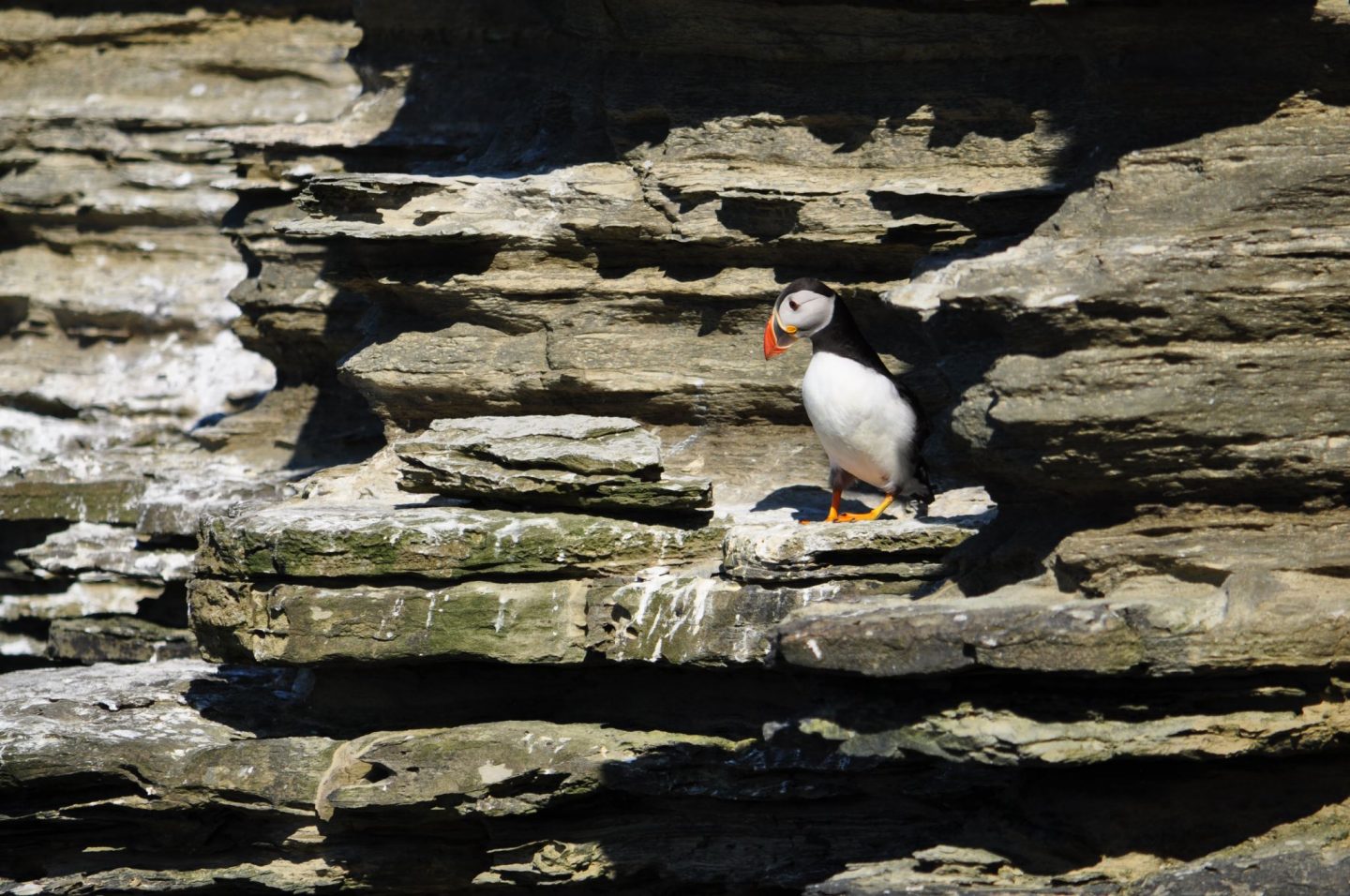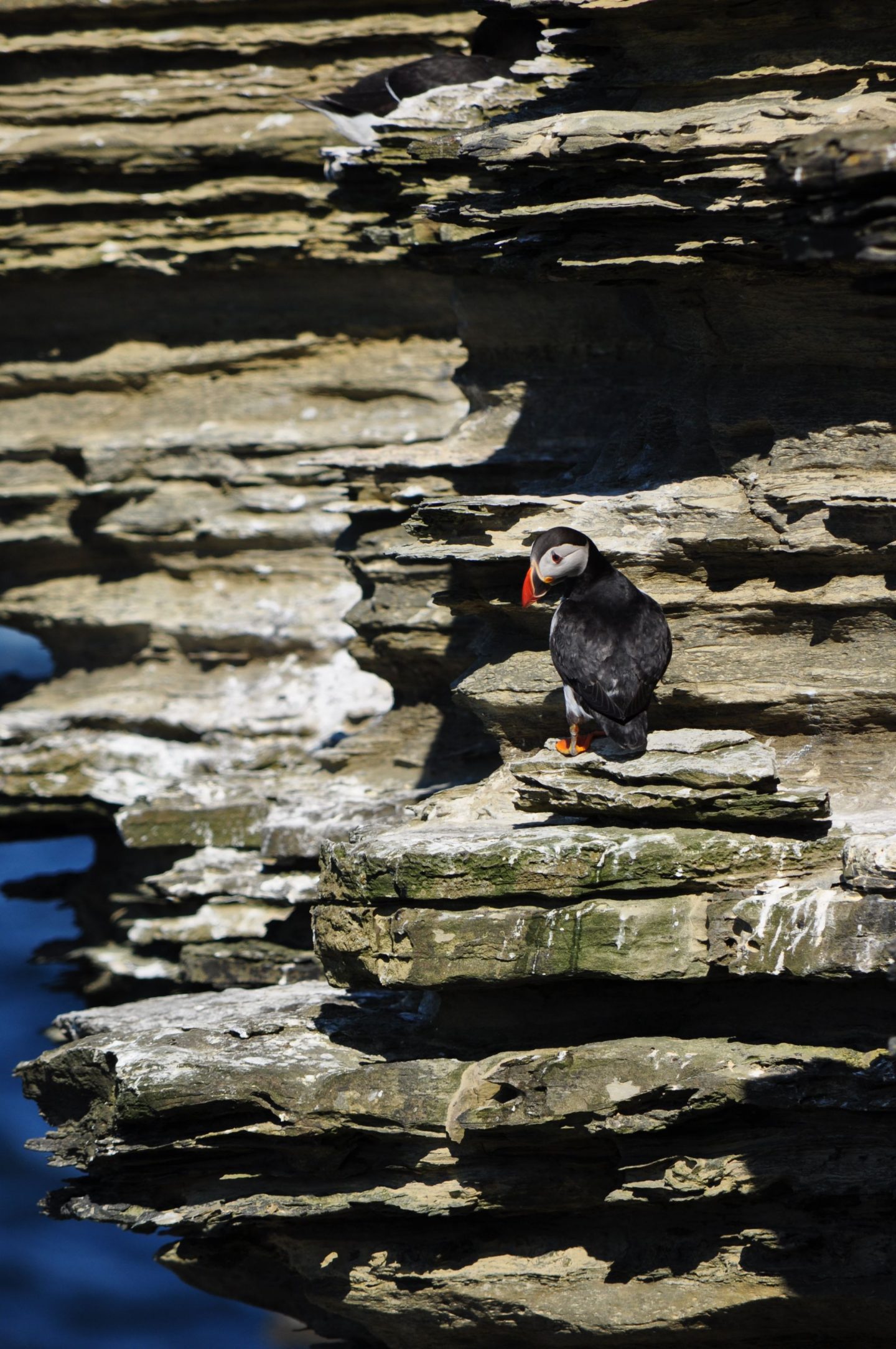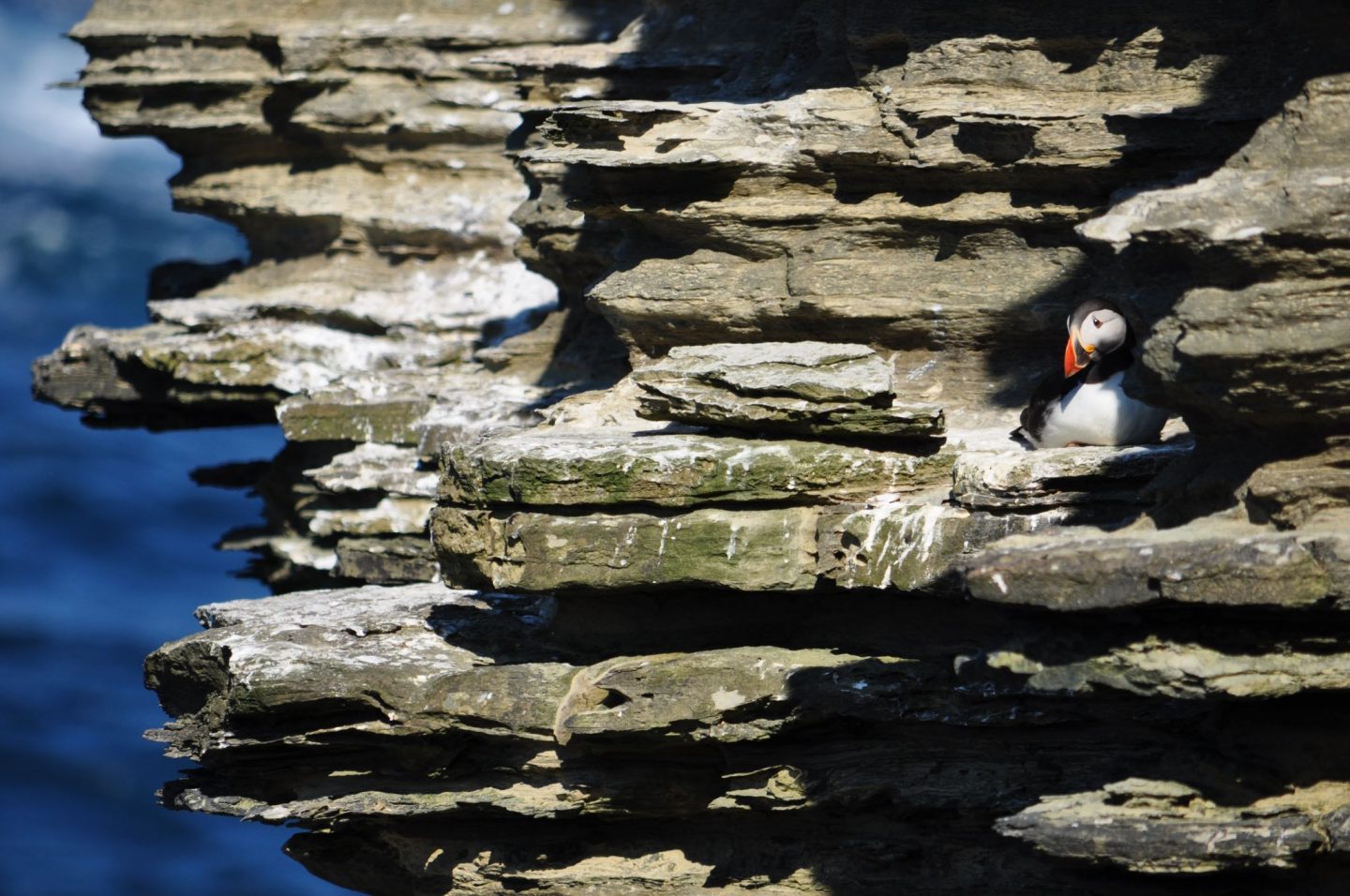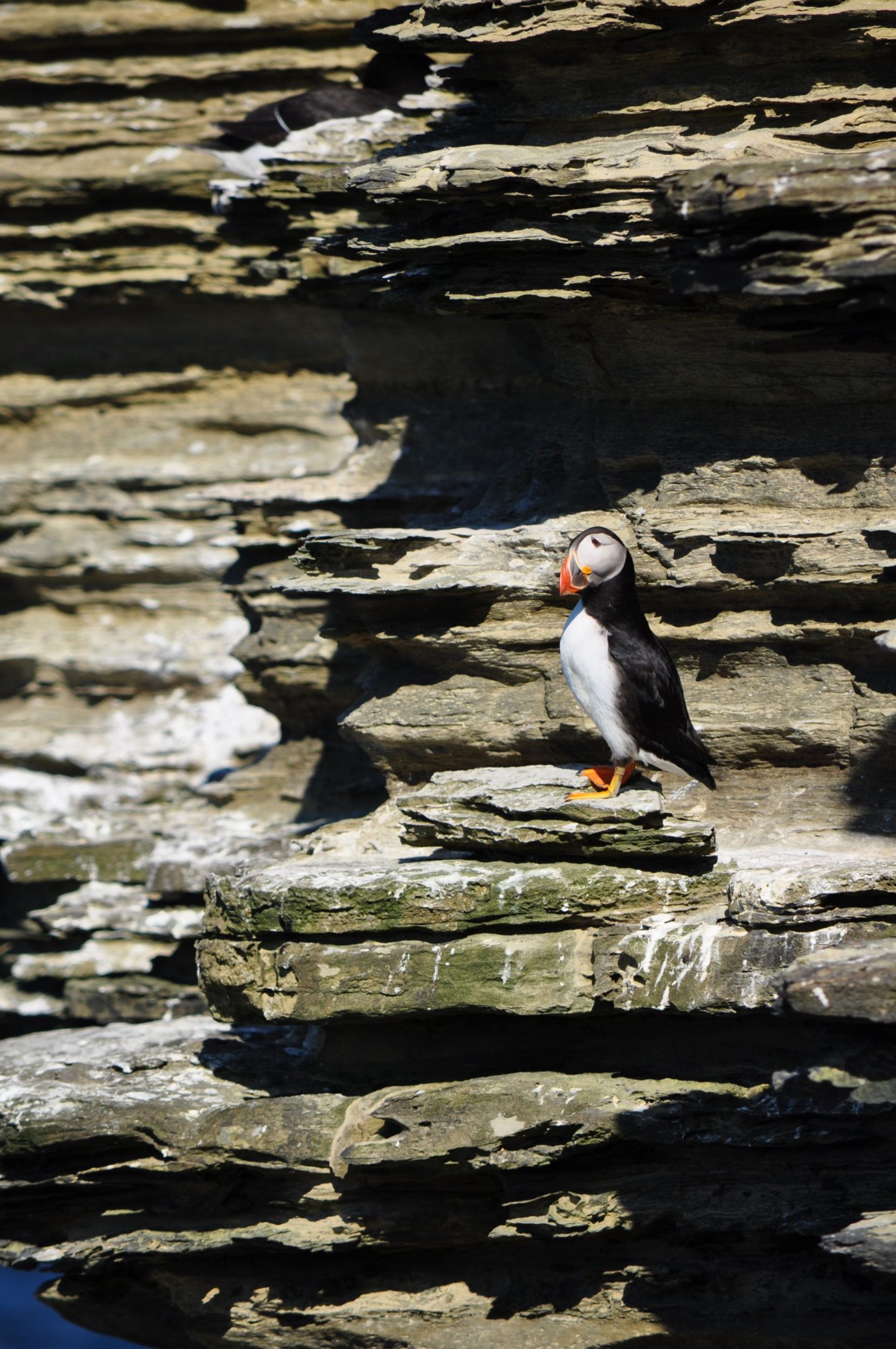
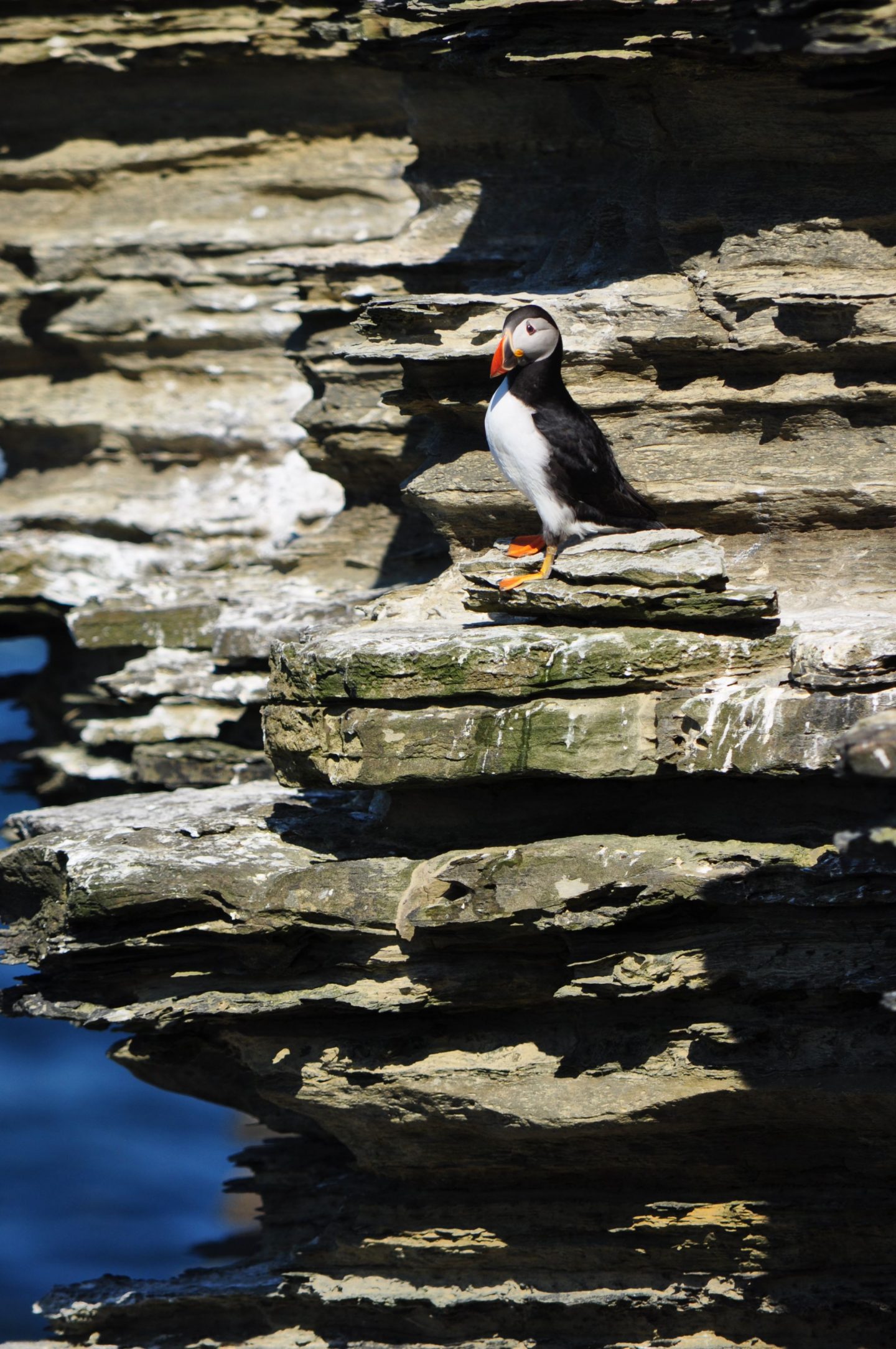
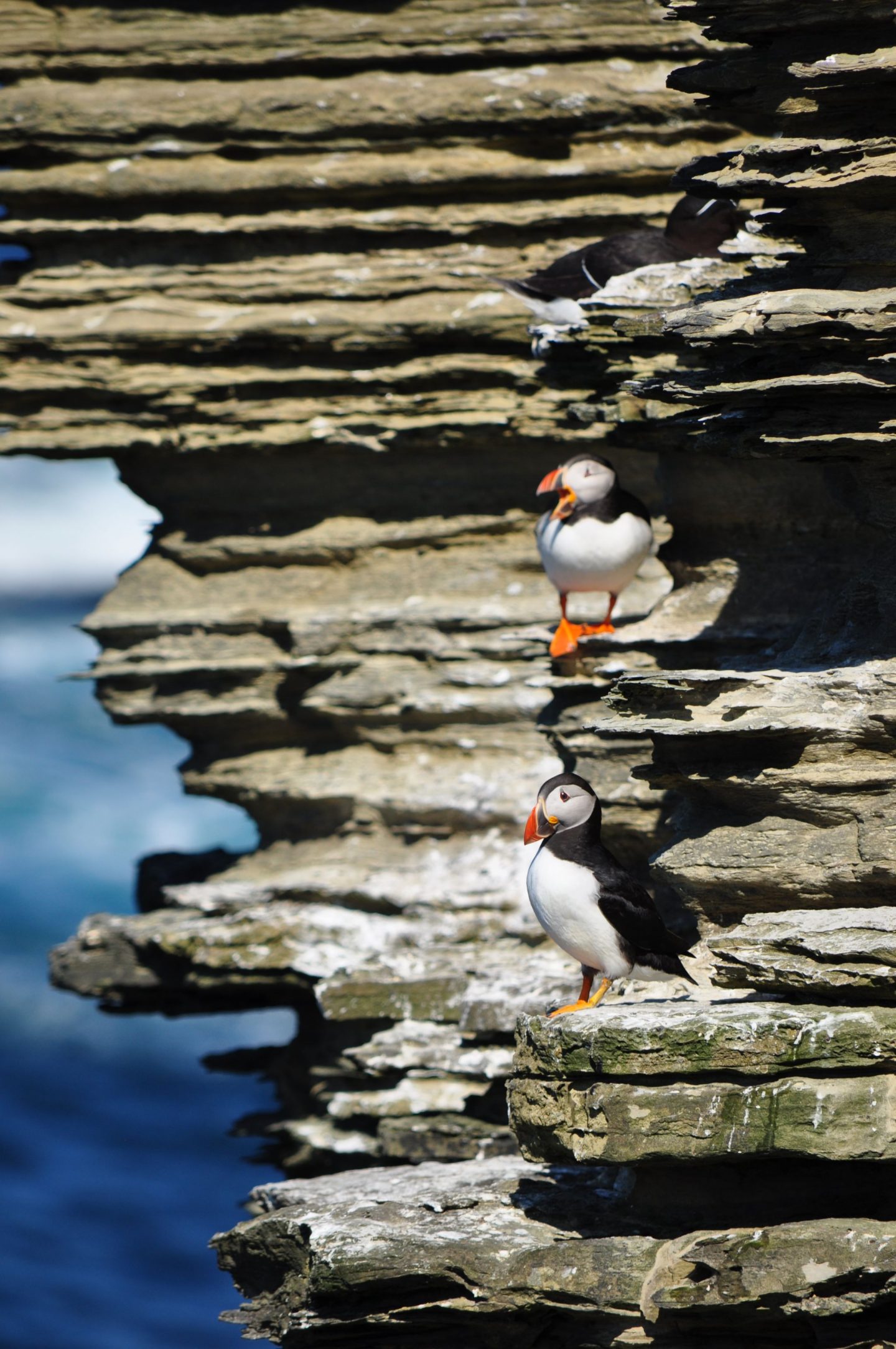
Want to know the number one question you get asked as a seabird surveyor? Puffins. Or more specifically, their whereabouts. All other auks be damned- if it doesn’t have an orange beak, it shall be passed over. This may be exaggerating the point a little, but the persistence of that question does trigger a twinge that I think a lot of conservationists get when they see the charismatic megafauna getting all the attention, yet again. So the snob inside me tells me to be the breath of fresh air that ignores the puffins, and focuses their photography on the more obscure stuff.
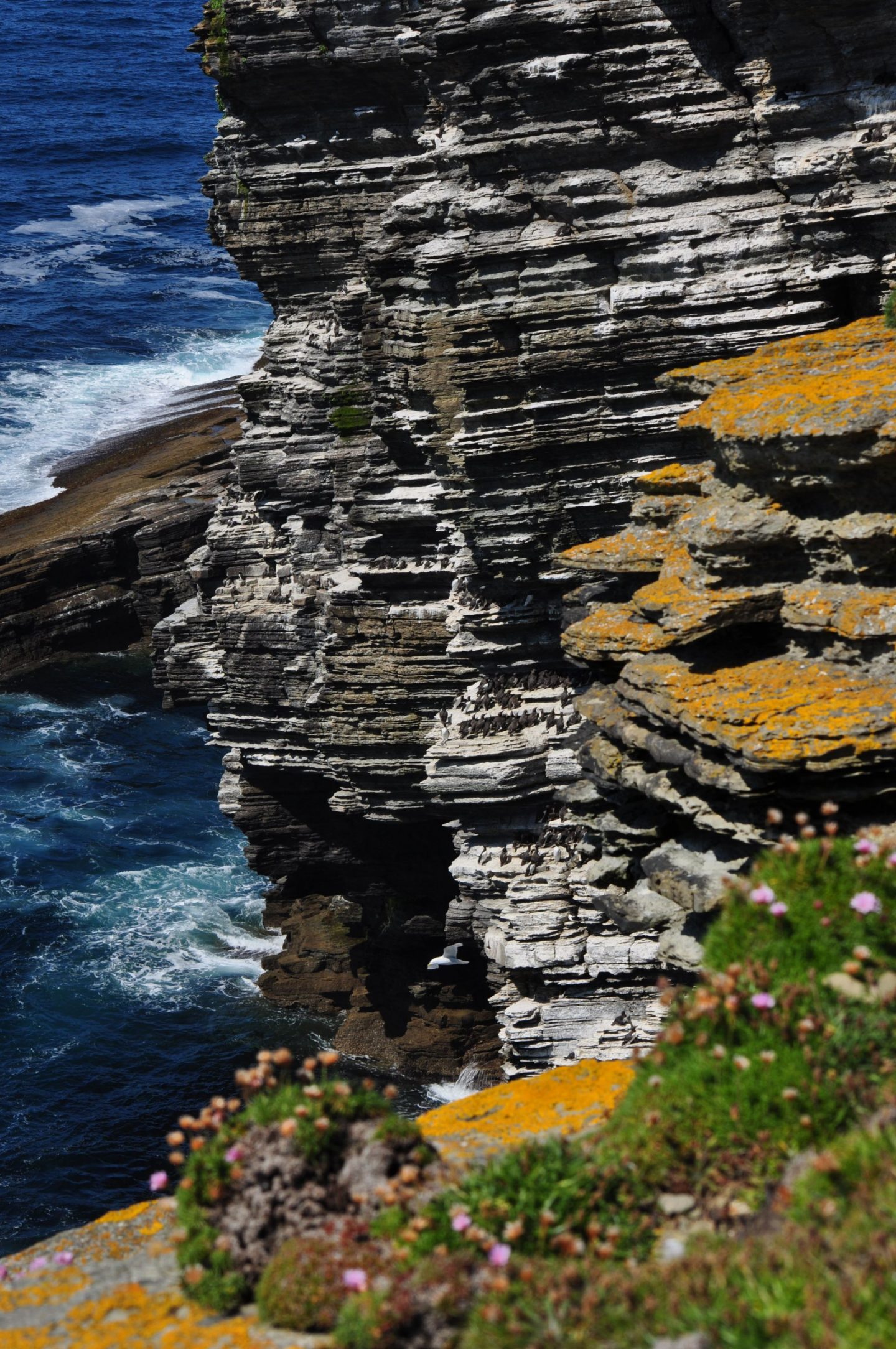
There’s only one problem tough; and that is, that as soon as I see those little orange feet, my resolve disappears faster than a herring gull swooping on a stray chip. During our seabird surveys at Marwick Head I found a ledge favoured by puffins, and would find myself slinking off once we were finished to try to catch fifteen minutes with them as they returned from their fishing trips. I loved that by virtue of spending the winter on the Atlantic Ocean they must be hard as nails, and yet when they waddled around the shore they always looked rather portly. How their brightness was offset by their sharp monochrome colouring and their beautiful smoky eyes. Truth is, I love puffins in about as equal a measure as I resent them taking the spotlight off other species. So it would seem that our complicated relationship will continue – next time, though, I might judge the ‘where are the puffins’ question a little less harshly.
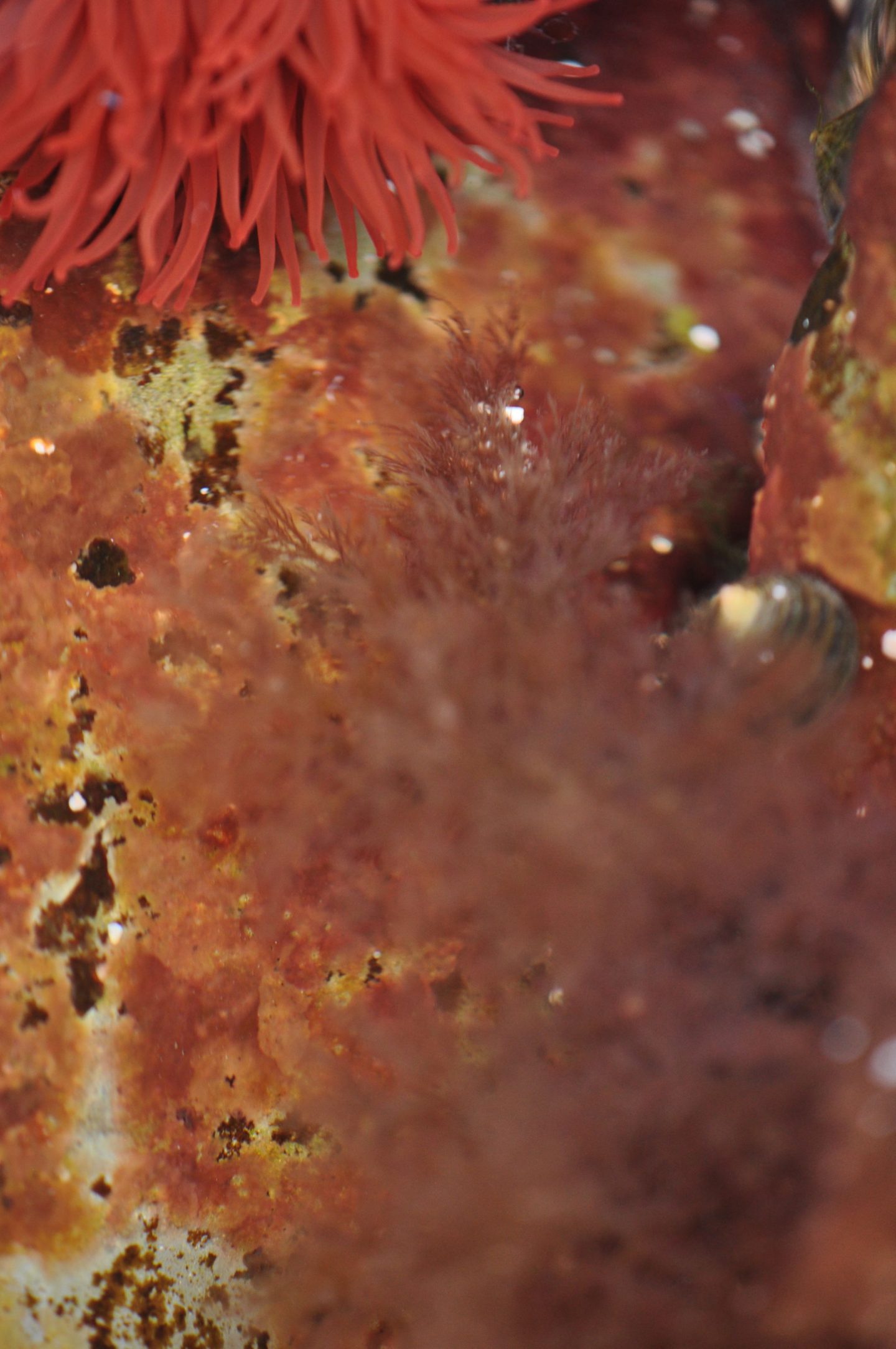
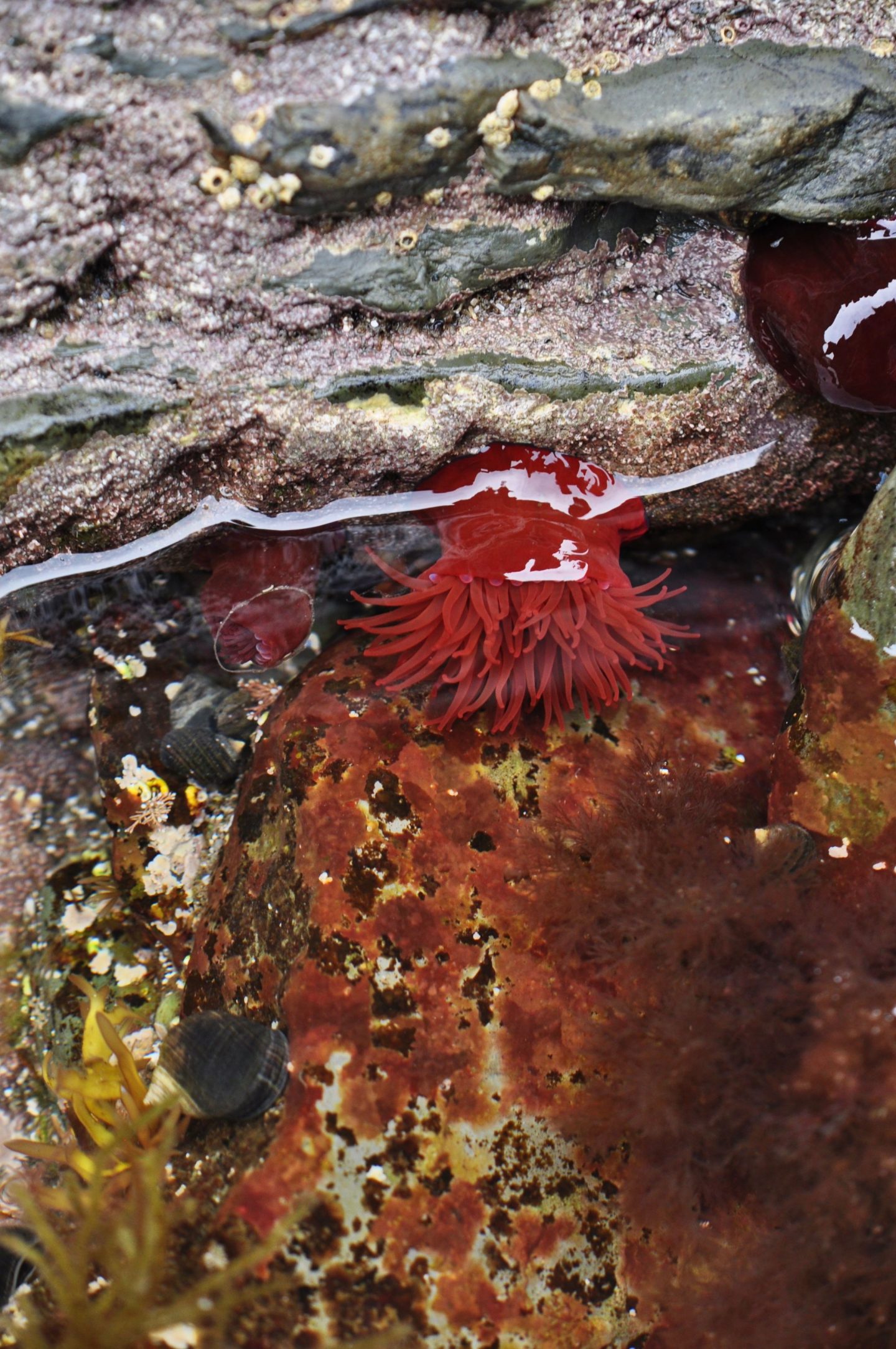
N.B. I have zero reason for including these pictures of a beadlet anemone in this post other than the fact that I liked how the colours go together. The rock pools near Marwick Head were littered with them- if you look closely, you can see the blue ring of beads (known as acrorhagi) that have a high concentration of nematocysts – specialised stinging cells that are used to catch prey and fight other anemones.