

Is there any tree more quietly dignified than an oak? I bloody love the things, but am struggling to find the words to say exactly what I find so comforting about them – it’s something about the wide and gnarly trunks, the contrasting smoothness of the acorns, and how nice they are to hold in your hand. Last week I was back at Strumpshaw, and as seasonal change was in the air I found my gaze drifting back towards the trees. Autumn is their time under the spotlight, so with peak-foliage appreciation coming up soon I thought I’d pop up a post to provide an answer to something I normally get a few WhatsApps to query at this time of year- what’s this weird thing I’ve spotted on an oak tree?
Nine times out of ten, what they’ve spotted is a gall – an aberrant growth that’s made of plant tissue, but that the plant has been forced to make by an insect, fungus, or bacteria. Most of the insects that can do this are known as gall wasps – they’re hymenopterans, so they’re related to the more familiar yellow and black variety most people can identify, but they’re teeny tiny and they don’t sting. Thinking about it it’s pretty extraordinary that they can hijack a plant’s growth systems to force it to make something so different as the things shown below- but that’s nature for you. Here are the three most common galls that you might see this time of year:


(1) KNOPPER GALL
Caused by the wasp Andricus quercuscalicis, knopper galls are outgrowths of acorns. You’ll mainly find them on English oaks (Quercus robur) – you can tell these apart from the other main oak in the UK (Q. petraea) by whether the acorns are on stalks or not. The lifecycle is marvellously complicated, requiring a third species of oak to go all the way through and involving two different generations (galls are the perfect entry-level drug into the fascinating, macabre and convoluted world of parasitic lifecycles). The asexual generation is the one that grows in the galls – all of the larvae inside them are female, and they stay inside the gall until it goes brown and drops to the forest floor. From there the larvae will pupate and move to their other host species – the Turkish oak, Q. cerris. There they will lay eggs in tree’s male catkins, which will give rise to a generation with both males and females. The males and females shuffle the genes, the females go back to the English oaks, and lay eggs inside of developing acorns – thus the process starts again.

(2) COMMON OAK GALL
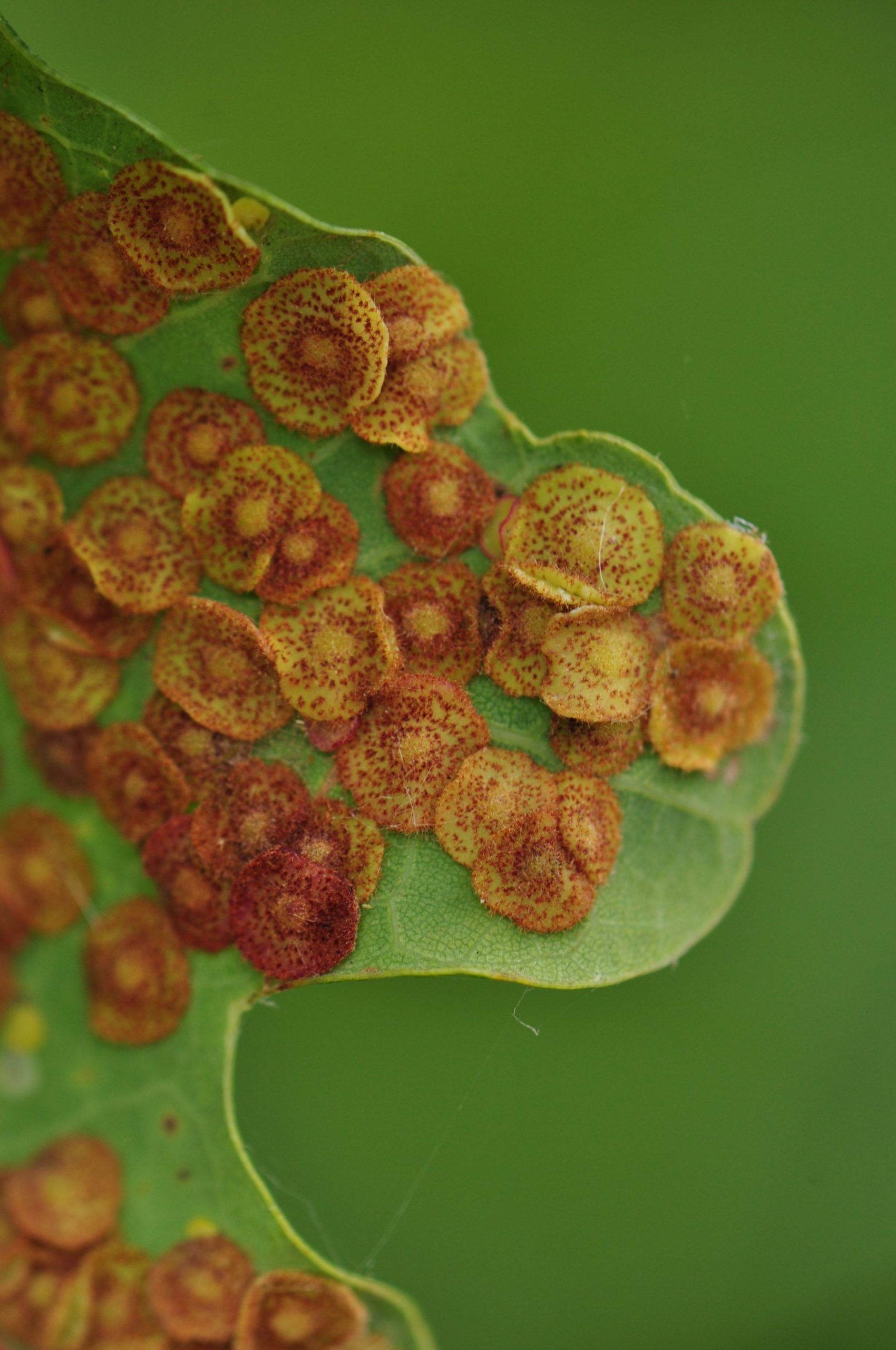
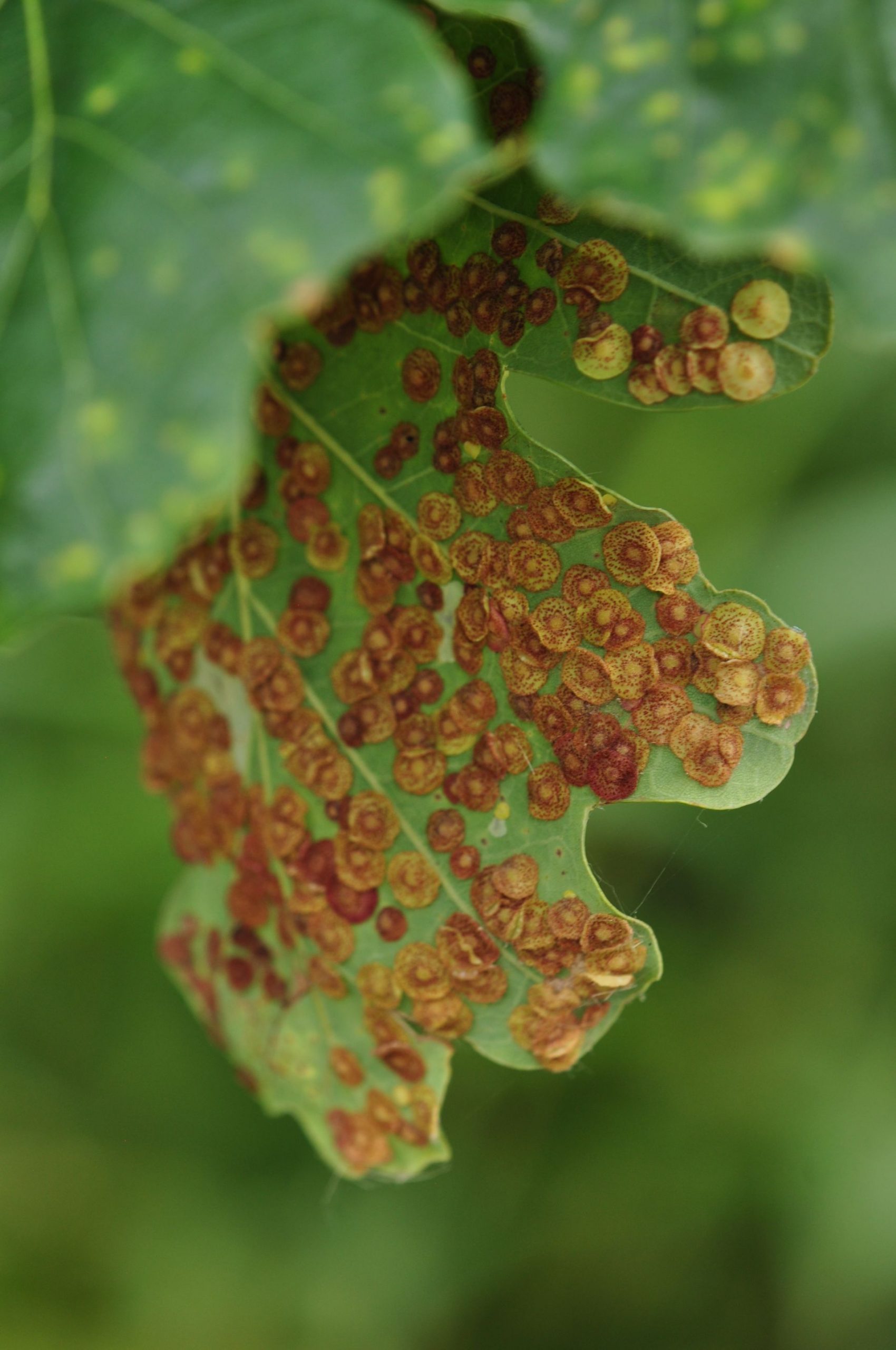
While knopper galls still bear some semblance to the acorn from which they came, spangle galls are where things start to get really weird. The yellow, red speckled discs that can commonly be found on the underside of oak leaves are common spangle galls– they’re another wasp creation, this time of the tiny Neuroterus quercusbaccarum. It’s a similar story to the knopper galls – each disc contains a single larva that overwinters on fallen leaves and emerges in the spring, and all the wasps in this generation will be female. Finding out how the wasps can induce such the oak to grow something to wildly different from leaf tissue is something that tempts one to do a whole degree in plant science – but I think nine years at university is probably enough.

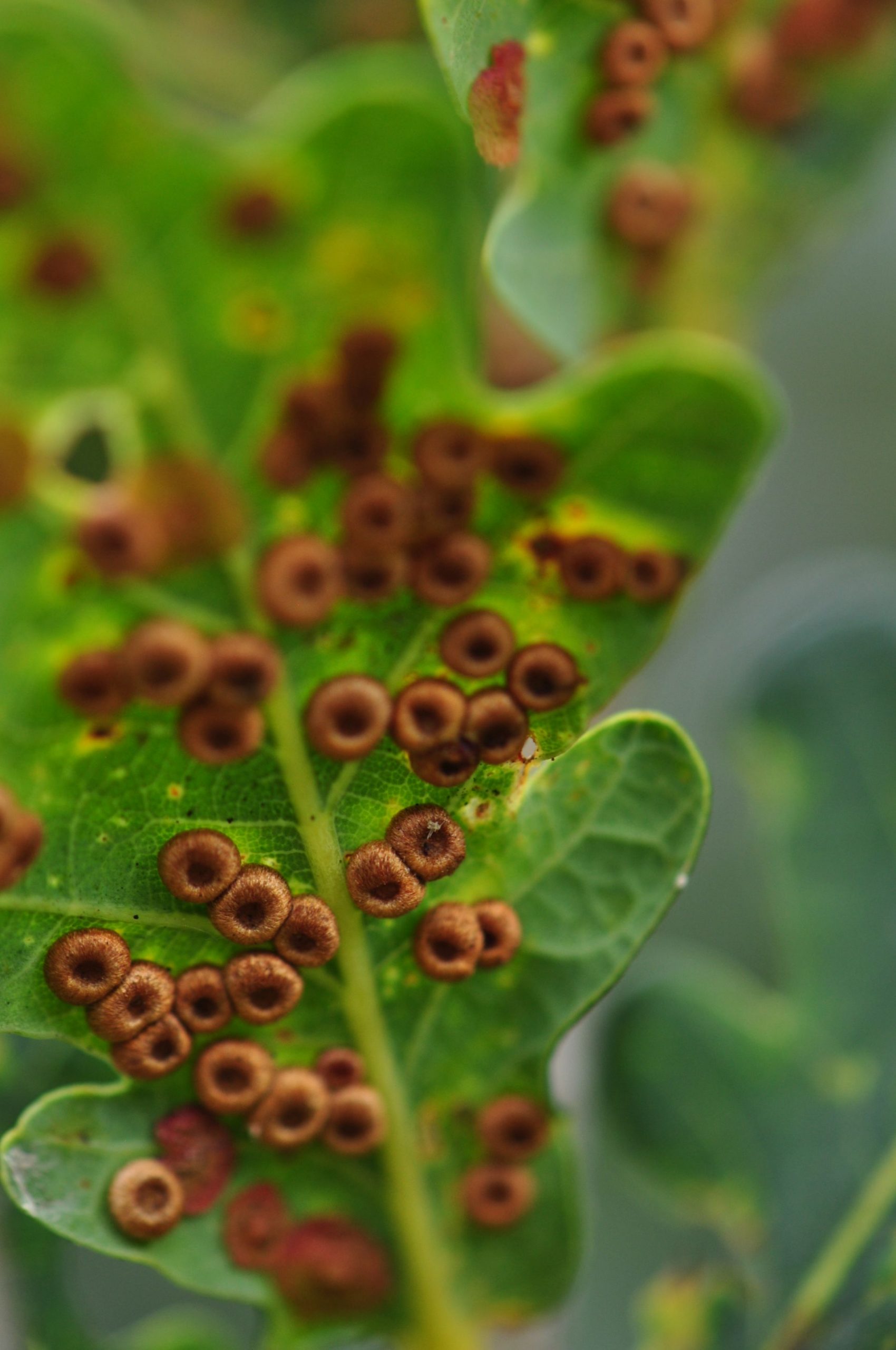

(3) SILK SPANGLE GALL
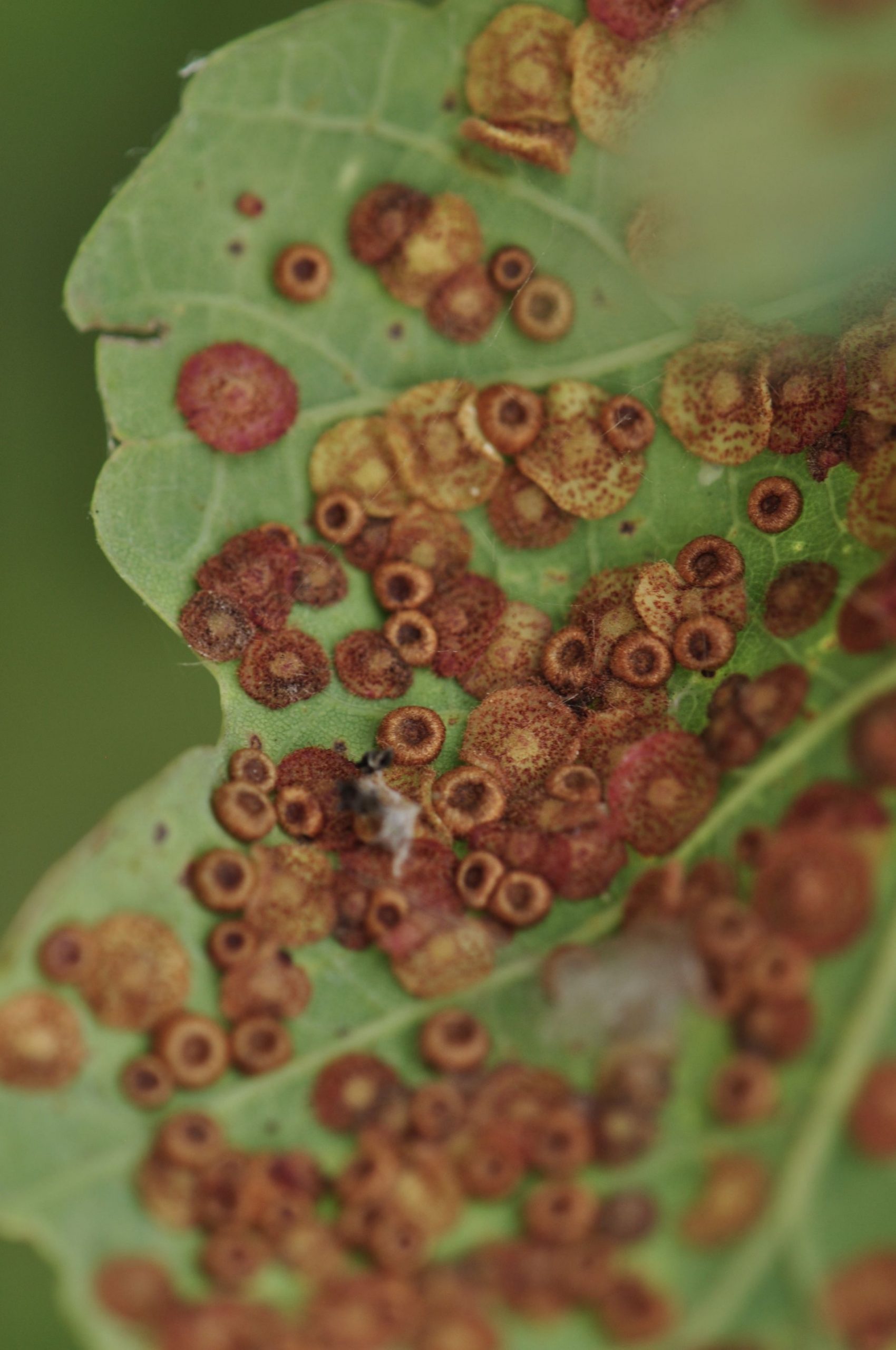
Last but very much not least, my very favourite of all galls, the silk button spangle gall. Looking to all intents and purposes like a coppery doughnut of spun thread, it hosts the larva of yet another different wasp species, Neuroterus numismalis. The sight of them fill me with thoughts of cosy jumpers and knitting and apples in pastry, and all other good things that come with cooler temperatures and bronze hues. Over-romanticizing much? Maybe, but I am unapologetic for taking joy in the small things these days.

(4) And finally, a mystery. I found this (ichneumon?) wasp spending a lot of time doing something to a leaf miner trail while I was out taking these photos. What is she doing? I have no idea. That’s the great thing about nature – you’ll never run out of new things to explore.


